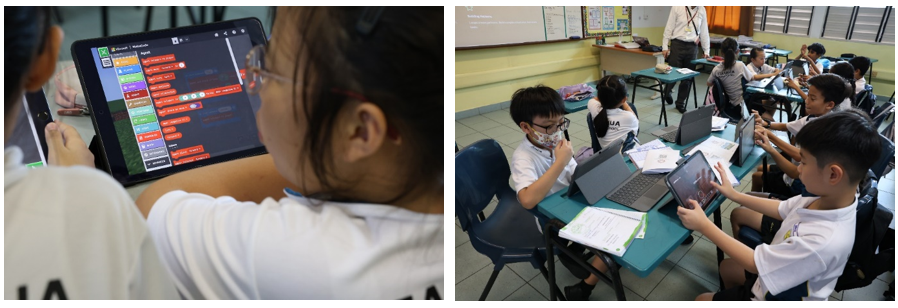
Applied Learning Programme (ALP)
Discover how Lianhua Primary's ALP uses robotics and technology to bring learning to life, building students' coding and problem-solving skills from Primary 1 onwards.
RITE @ LIANHUA
Applied Learning Programme (ALP): Coding for Sustainability
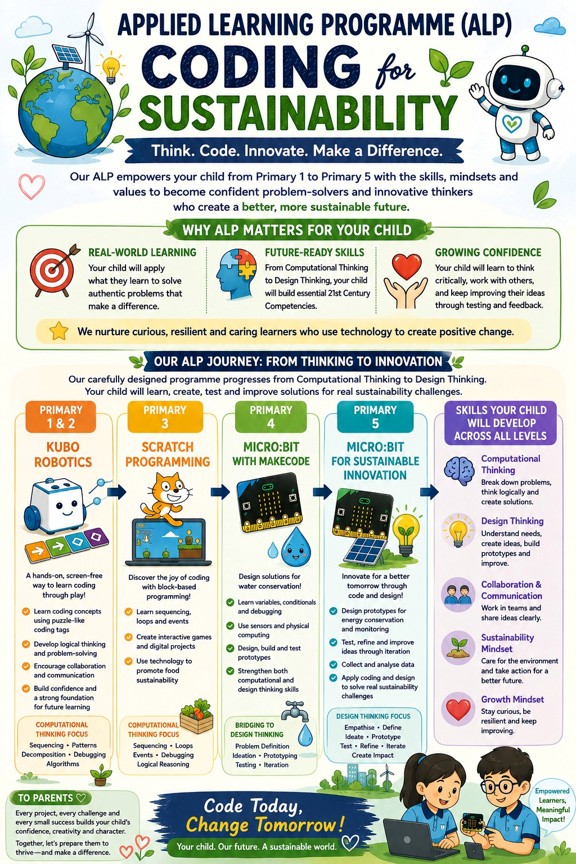
Our Applied Learning Programme (ALP) aims to equip students with the knowledge, skills, and dispositions to thrive in an ever-changing world. Through meaningful, hands-on learning experiences, students apply what they learn in authentic contexts to solve real-world challenges centred on sustainability.
Objectives of the ALP
Our ALP seeks to:
Help students appreciate the relevance of their learning by applying knowledge and skills to authentic, real-world contexts.
Develop 21st Century Competencies, with a focus on Adaptive Thinking and Inventive Thinking, alongside computational thinking, critical thinking, collaboration, and communication.
Foster the joy of learning while nurturing resilience, curiosity, and adaptability in a rapidly changing world.
Inspire students to become confident problem-solvers and innovative thinkers who can make a positive impact on their communities.
Programme Structure
Our ALP runs progressively from Primary 1 to Primary 5, building students' computational thinking, design thinking, coding, and innovation skills at every level.
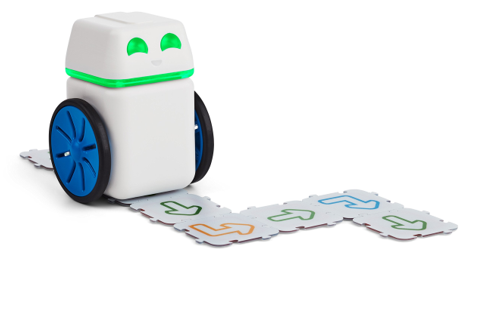
Primary 1 & Primary 2 – KUBO Robotics
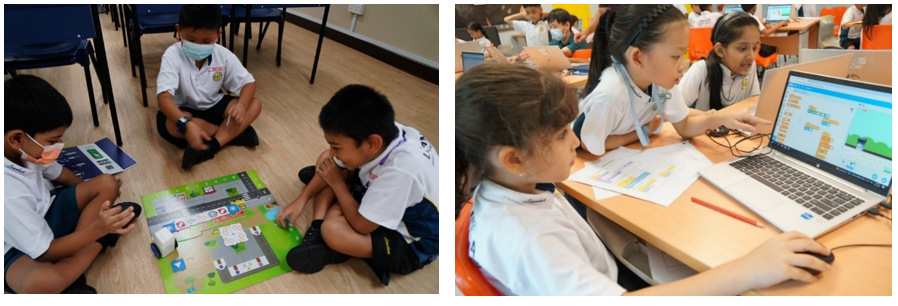
Our youngest learners begin their coding journey with KUBO, a screen-free robotics platform that introduces computational thinking through play-based learning. Using puzzle-like coding tags, students learn fundamental programming concepts in an engaging and accessible way. Through hands-on activities, they develop logical thinking, creativity, and problem-solving skills while working collaboratively to complete coding challenges. KUBO also builds confidence by allowing students to learn at their own pace, providing a strong foundation for future STEM learning.
Through collaborative activities, students develop logical reasoning, perseverance, and confidence as they test, refine, and improve their solutions. This stage establishes the essential computational thinking habits that underpin future coding and innovation.
Learning Focus
Sequencing and algorithms
Pattern recognition
Decomposition
Debugging
Collaboration and resilience
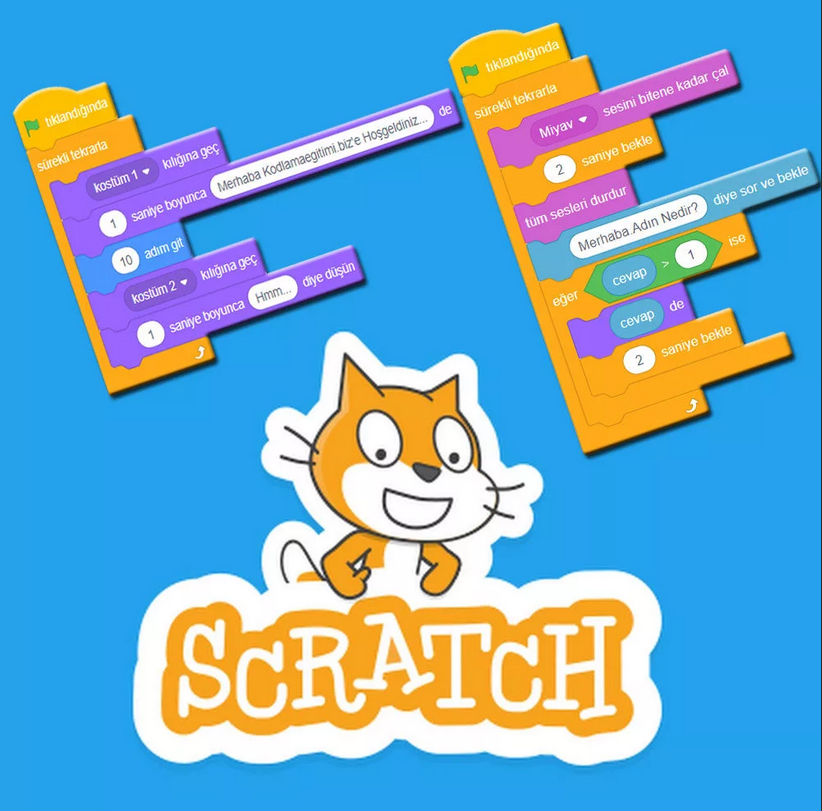
Primary 3 – Scratch Programming
Students are introduced to Scratch, a block-based programming platform, where they learn foundational coding concepts such as sequencing, repetition, and logical reasoning. They apply these skills to create interactive games and digital projects centred on food sustainability, helping them understand how technology can be used to address real-world issues. At this stage, students begin making design decisions while developing digital solutions for authentic audiences.
Learning Focus
Algorithms and logical reasoning
Loops and conditionals
Debugging and testing
Creative problem-solving
Applying technology to sustainability
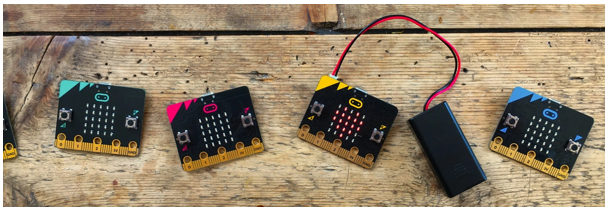
Primary 4 – Micro:bit with MakeCode
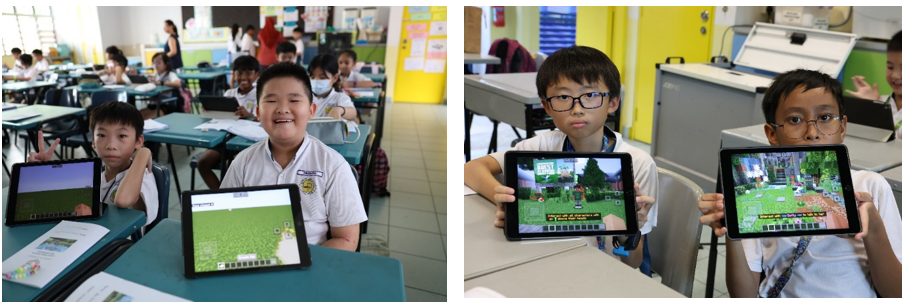
Building on their coding knowledge, students use Micro:bit with MakeCode to explore programming concepts such as loops, variables, conditionals, and debugging. They design and develop innovative solutions related to water conservation, strengthening both their computational thinking and design thinking skills. Students move beyond writing code to understanding users' needs and designing practical solutions. Computational thinking supports the technical development of their prototypes, while design thinking introduces students to empathising with users, defining problems, ideating, prototyping, testing, and refining solutions.
Learning Focus
Variables, inputs and outputs
Sensors and physical computing
User-centred problem-solving
Prototyping and iteration
Design Thinking process
Primary 5 – Micro:bit for Sustainable Innovation
Students further develop their Micro:bit programming skills by designing prototypes that promote electric energy conservation and monitoring. Through the design process, they apply coding and computational thinking to create practical solutions for authentic sustainability challenges while refining their creativity, resilience, and collaborative skills. By this stage, coding becomes a tool that enables innovation, while design thinking provides the framework for solving complex real-world problems.
Learning Focus
Integrating coding with design
User-centred innovation
Iterative prototyping
Design Thinking process
Across all levels, students are encouraged to think critically, break down complex problems into manageable parts, test and refine their ideas, and communicate their solutions effectively. Through this progressive learning journey, our ALP nurtures future-ready learners who are curious, adaptable, and empowered to use technology to create meaningful and sustainable change.